

Did you know that over 3.4 percent of K-12 students in some states now attend full-time virtual schools? As online learning becomes more common, families and educators seek flexible tools that reach students wherever they are. Understanding virtual school programming helps you make sense of its many options, revealing how digital classrooms deliver real instruction and support for every kind of learner.
Key Takeaways
| Point | Details |
|---|---|
| Virtual School Programming Expands Access | Virtual school programming provides comprehensive learning opportunities, especially for at-risk and remote students, addressing educational disparities. |
| Diverse Delivery Models | Programs offer various formats, including full-time virtual, supplemental online courses, and hybrid environments, adapting to different learning styles. |
| Technological Infrastructure is Critical | Effective implementation requires robust technological support and training, ensuring educators and students can leverage digital tools successfully. |
| Balancing Benefits and Challenges | Schools must strategically navigate the advantages of increased accessibility against potential issues like student engagement and performance. |
Defining Virtual School Programming for K-12
Virtual school programming represents a dynamic digital educational approach designed to deliver comprehensive learning experiences for students in kindergarten through 12th grade through online platforms and technology-enabled instructional methods. According to research from the World Bank, these programs aim to address critical educational challenges such as teacher shortages, reaching at-risk students, and serving remote populations who might otherwise have limited access to quality education.
At its core, virtual school programming encompasses a broad spectrum of educational delivery models, including fully online schools, hybrid learning environments, and supplemental digital courses. These programs leverage digital technologies to create interactive, engaging learning experiences that can be accessed from virtually anywhere with an internet connection. Understanding the Guide to Virtual School Shows can provide deeper insights into how digital platforms transform educational engagement.
Key characteristics of effective virtual school programming typically include:
- Flexible scheduling and self-paced learning modules
- Interactive multimedia content
- Real-time instructor support
- Comprehensive digital assessment tools
- Customized learning pathways
While traditional classroom settings remain essential, virtual school programming offers a complementary approach that expands educational accessibility and adapts to diverse student learning needs. By integrating technology with pedagogical expertise, these programs create dynamic, inclusive learning environments that prepare students for an increasingly digital world.
Types of Virtual School Programs and Formats
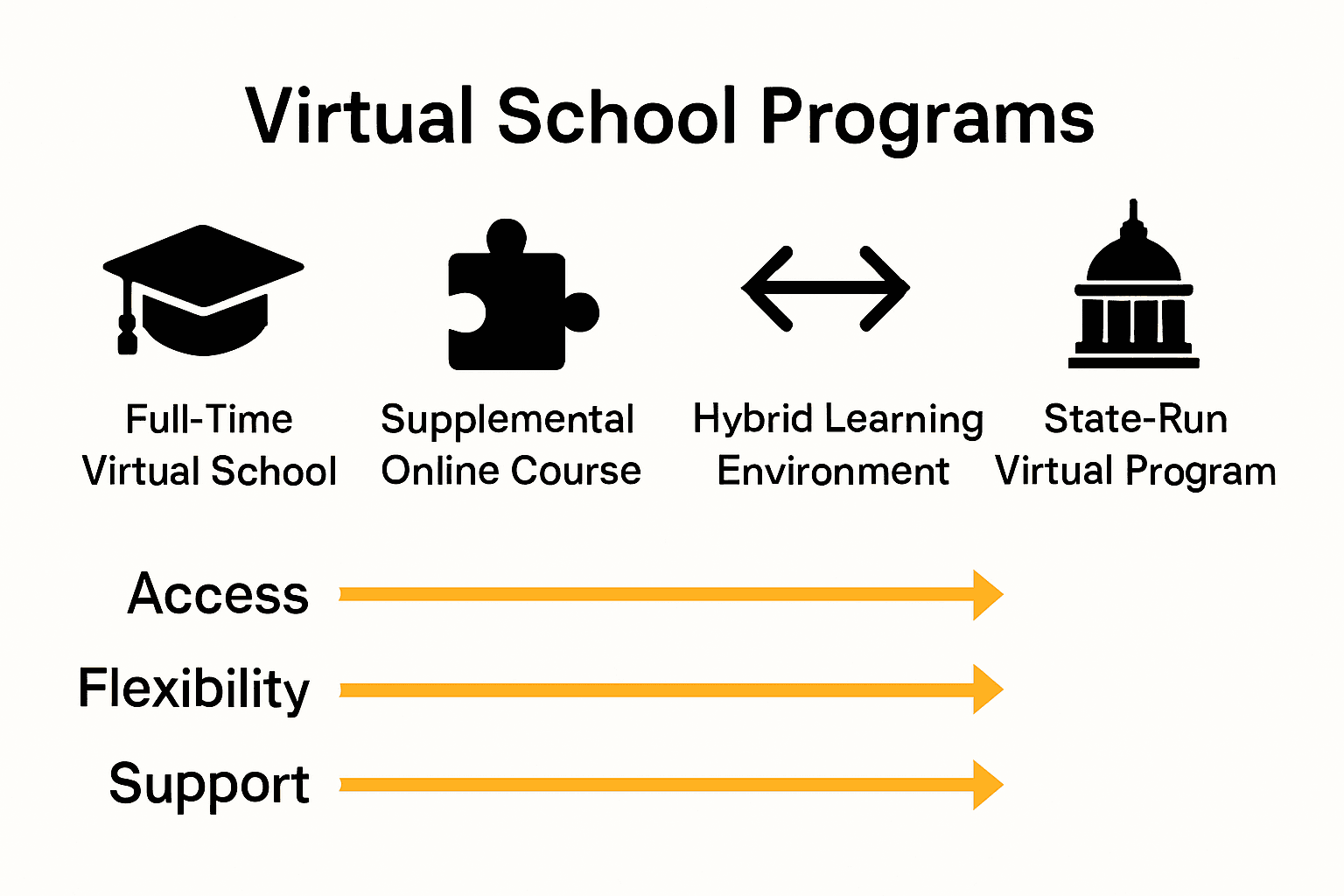
Virtual school programs have evolved into diverse formats that cater to different educational needs and learning styles. According to research from the Heritage Foundation, these programs encompass multiple delivery models, including full-time virtual schools, supplemental online courses, and blended-learning formats that can be delivered synchronously or asynchronously across various governance structures like state, district, charter, public, and private educational systems.
Virtual School Programs and Virtual Learning highlights the complexity of these educational approaches. The primary types of virtual school programs include:
Here’s a comparison of the main types of virtual school programs:
| Type of Program | Delivery Model | Example Features |
|---|---|---|
| Full-Time Virtual School | 100% online, remote | Complete curriculum Self-paced Teacher support |
| Supplemental Online Course | Online modules supplement in-person | Targeted subjects Flexible enrollment |
| Hybrid Learning Environment | Mix of online & in-person | Blended schedule Personalized pathways |
| State-Run Virtual Program | Public, online access | 24/7 availability Curriculum aligned to state standards |
- Full-Time Virtual Schools: Comprehensive online educational experiences where students complete entire curriculum remotely
- Supplemental Online Courses: Additional digital learning modules that complement traditional classroom instruction
- Hybrid Learning Environments: Blended models combining online and in-person educational experiences
- State-Run Virtual Programs: Like Missouri’s Virtual Instruction Program, offering self-paced online courses accessible 24/7
These diverse formats provide unprecedented flexibility, allowing students to access educational content through email, instant messaging, interactive platforms, and comprehensive digital learning management systems.
By offering multiple engagement models, virtual school programming ensures that students with different learning preferences, geographical constraints, and individual needs can access quality educational experiences.
How Virtual Programming Is Delivered to Schools
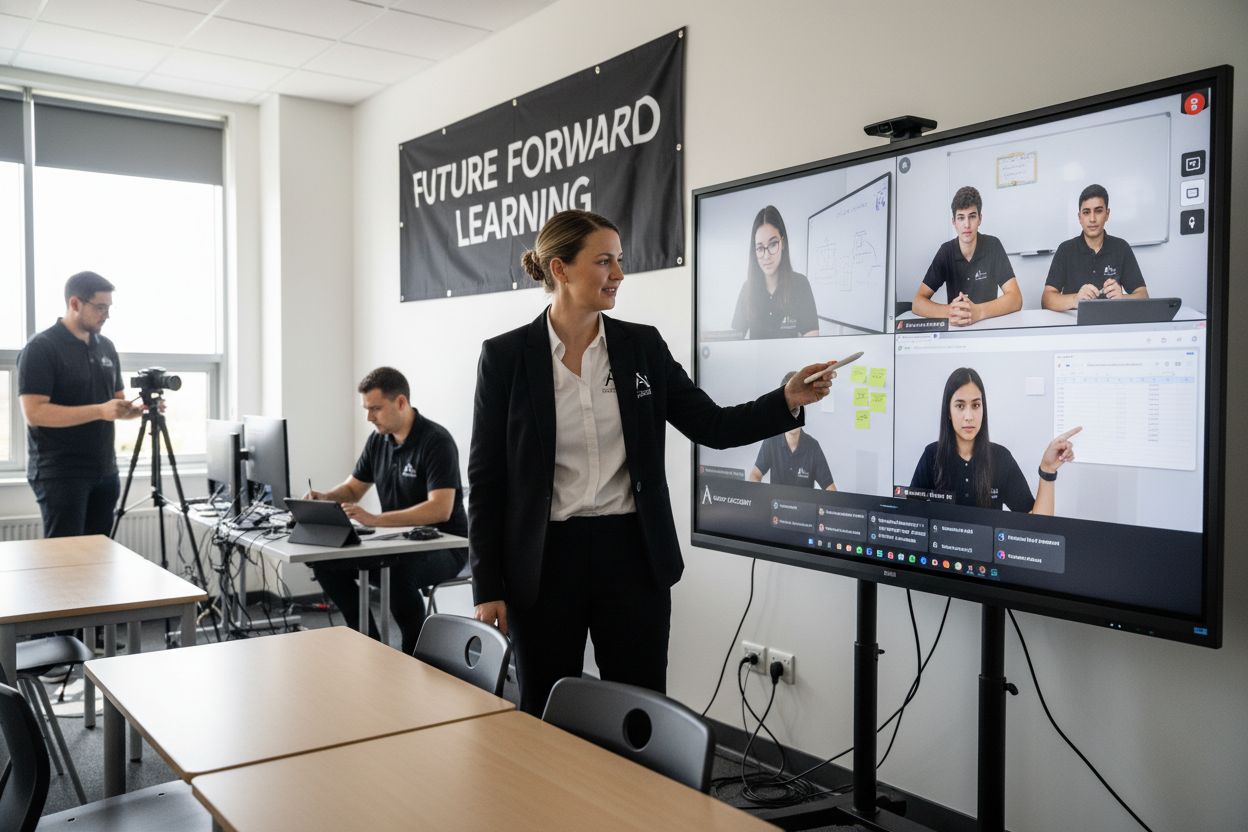
Virtual school programming is delivered through sophisticated technological infrastructures that have dramatically evolved beyond simple video conferencing. According to research from EdTech Magazine, some districts have established purpose-built virtual learning studios within school sites, specifically outfitted with advanced video-conferencing technology and dedicated support spaces where teachers can deliver instruction directly to remote students.
How to Schedule the BEST VIRTUAL School Assemblies illustrates the complex logistics behind effective digital educational delivery. The primary delivery mechanisms typically include:
- Synchronous Online Classrooms: Real-time interactive sessions with live teacher engagement
- Learning Management Systems (LMS): Comprehensive digital platforms hosting course materials
- Video Conferencing Platforms: Tools like Zoom, Microsoft Teams, and Google Meet
- Dedicated Streaming Channels: Specialized educational broadcast environments
In states like Washington, virtual programs now follow rigorous frameworks with structured requirements. The Alternative Learning Experience law mandates written learning plans, consistent certificated teacher contact, and regular progress reviews. This approach has led to significant growth, with full-time virtual enrollment increasing from 1.9% pre-pandemic to 3.4% by 2023-24, demonstrating the increasing sophistication and acceptance of digital educational delivery models.
Key Benefits and Challenges for Schools
Virtual school programming presents a complex landscape of opportunities and obstacles for educational institutions. According to research from the World Bank, these digital learning environments offer significant strategic advantages while simultaneously presenting notable implementation challenges that schools must carefully navigate.
5 Benefits of School Enrichment Programs highlights the transformative potential of innovative educational approaches. The key benefits and challenges of virtual school programming include:
Benefits:
- Reaching students in teacher-scarce subject areas
- Supporting at-risk and geographically distant student populations
- Generating cost efficiencies in educational delivery
- Providing flexible learning opportunities
- Enabling personalized educational experiences
Challenges:
- Potential for lower student academic performance
- Reduced student socialization opportunities
- Decreased student engagement and retention rates
- Technical implementation and infrastructure complexities
- Varying student technological access and digital literacy levels
Successful virtual school programming requires strategic planning, robust technological infrastructure, and a nuanced understanding of individual student needs. Schools must balance the innovative potential of digital learning with comprehensive support mechanisms to ensure meaningful educational outcomes.
Costs, Suitability, and Selection Criteria
Virtual school programming requires careful financial and strategic assessment to ensure effective implementation. According to research from the Heritage Foundation, online learning offers potential cost reductions through increased productivity and expanded access to high-quality instruction across geographical boundaries, but simultaneously demands sophisticated policy and funding reforms to support equitable educational experiences.
5 Benefits of School Enrichment Programs underscores the importance of comprehensive program evaluation. The critical selection criteria for virtual school programming involve analyzing:
Key Investment Considerations:
- Technology Infrastructure: Video-conferencing equipment
- Dedicated Support Staff: Specialized instructional and technical personnel
- Learning Management Systems: Comprehensive digital platforms
- Professional Development: Training for educators in digital delivery
Selection criteria typically include:
- Alignment with existing curriculum standards
- Scalability of digital platforms
- Student demographic and learning needs
- Budget constraints and long-term sustainability
- Technical support and maintenance capabilities
According to EdTech Magazine, schools must carefully weigh the substantial upfront investments required for high-quality virtual programming, including potential studio setups and specialized technological resources. Successful implementation demands a holistic approach that balances technological capabilities, educational objectives, and financial feasibility.
Bring Virtual Programming to Life With Engaging School Assemblies
Virtual school programming promises flexibility and accessibility, but many schools struggle with low student engagement and limited social interaction. You want to give your students memorable moments while still meeting your educational goals. The article explains that effective virtual learning should include interactive, exciting content that reaches every child, no matter where they are. But finding options that truly connect with students is not easy.
Discover how our virtual and live school assemblies boost participation and spark curiosity during online learning.
Academic Entertainment helps you bridge the engagement gap with dynamic, educational assemblies covering science, culture, character education, and more. Our proven virtual programs bring lessons to life while supporting your goals for student growth and enrichment. Explore Academic Entertainment today and see how our tailored online shows can transform your school’s virtual programming now. Your students deserve an experience that stands out.
Frequently Asked Questions
What is virtual school programming?
Virtual school programming is a digital educational approach that delivers comprehensive learning experiences for K-12 students through online platforms. It addresses educational challenges like teacher shortages and serves remote populations.
What are the different types of virtual school programs?
The primary types of virtual school programs include full-time virtual schools, supplemental online courses, hybrid learning environments, and state-run virtual programs. Each type offers unique features to cater to different educational needs and learning styles.
How is virtual programming delivered to schools?
Virtual programming is delivered through sophisticated technological infrastructures, including synchronous online classrooms, learning management systems (LMS), video conferencing platforms, and dedicated streaming channels, enhancing real-time engagement and access to instructional content.
What are the benefits and challenges of virtual school programming?
Benefits include reaching students in scarce subject areas, supporting at-risk populations, and providing flexible learning opportunities. Challenges encompass lower student engagement, technical complexities, and varying access to technology among students.
Recommended
- Virtual School Programs and Virtual Learning – Academic Entertainment
- How to Schedule the BEST VIRTUAL School Assemblies – Academic Entertainment
- 5 Ways to Create a Virtual Learning Environment – Academic Entertainment
- What Is A Virtual Field Trip? – Academic Entertainment


