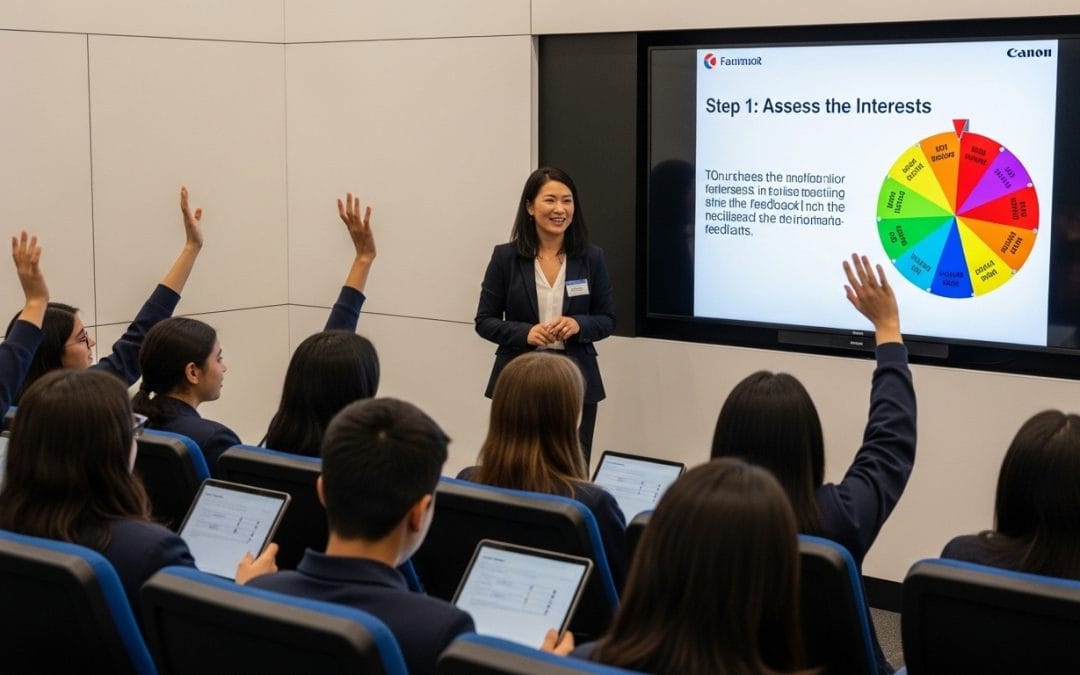
Planning a student assembly can feel like rolling the dice. You hope kids will pay attention and actually learn, but most assemblies become background noise. Yet when schools collect honest feedback within just 24 hours, they can spot exactly what sparks students’ interest and discover what turns a dull gathering into an event that leaves a mark. The real secret is knowing how to measure that impact—and use it to make every assembly unforgettable.
Table of Contents
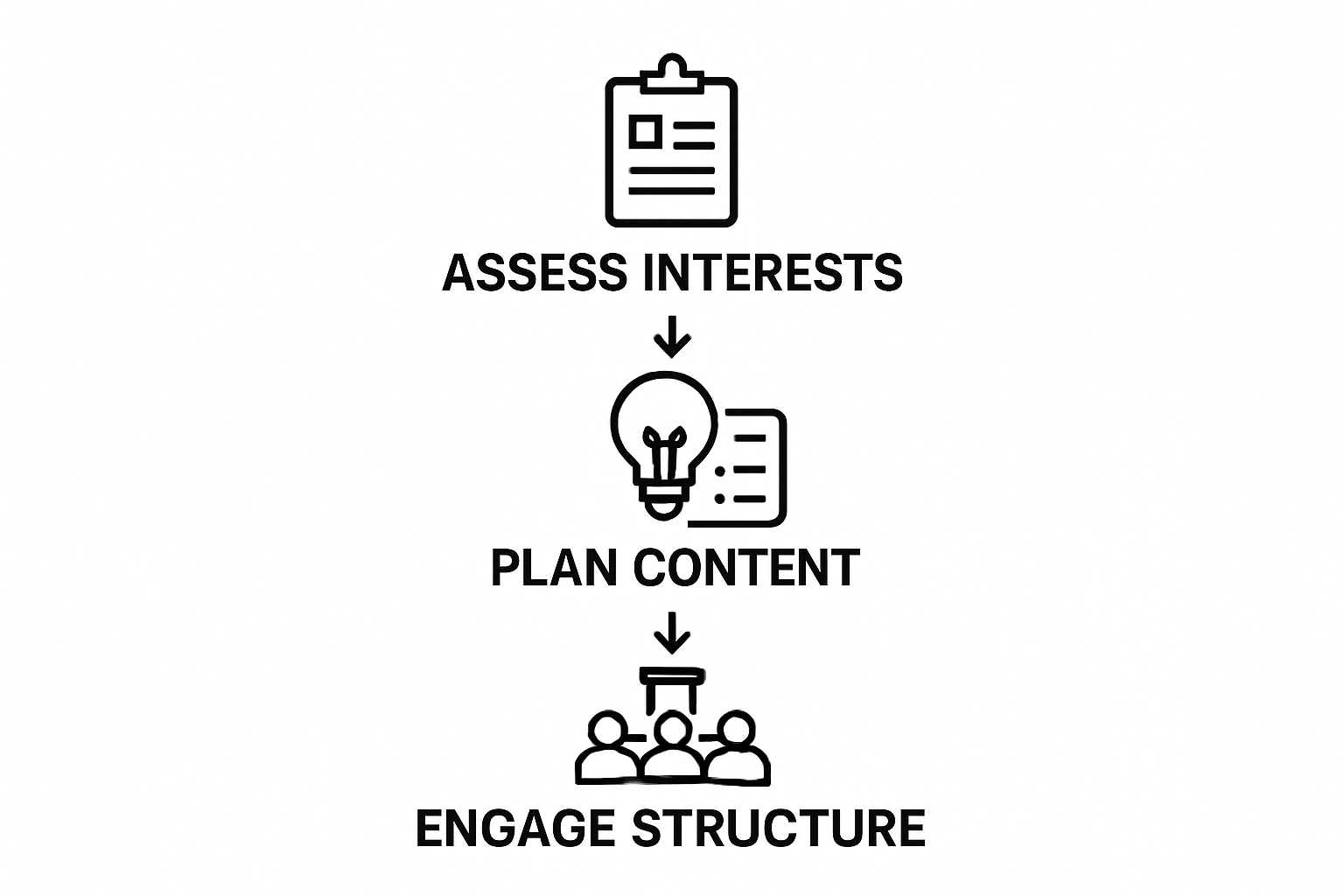
- Step 1: Assess The Interests Of Your Students
- Step 2: Plan Interactive And Relevant Content
- Step 3: Structure The Assembly For Maximum Engagement
- Step 4: Incorporate Dynamic Presentation Techniques
- Step 5: Gather Feedback And Evaluate The Impact
Quick Summary
| Key Point | Explanation |
|---|---|
| 1. Assess student interests first | Use surveys and conversations to gather insights about student engagement preferences and interests before planning assemblies. |
| 2. Plan interactive and relevant content | Design assembly content that actively involves students and connects to their lives and learning objectives for better engagement. |
| 3. Structure the assembly for engagement | Create a clear narrative arc and maintain engagement through pacing and varied activities, addressing different levels of engagement. |
| 4. Use dynamic presentation techniques | Master presentation styles that incorporate varied delivery methods, vocal dynamics, and visual aids to enhance students’ learning experience. |
| 5. Gather feedback for continuous improvement | Collect immediate and long-term feedback to measure impact and inform refinements for future assemblies, showing adaptability. |
Step 1: Assess the Interests of Your Students
Successful student assemblies start with understanding what truly captures students’ attention and imagination. Before planning any assembly, educators must dive deep into the unique interests, learning styles, and engagement preferences of their specific student population. This critical first step transforms assemblies from passive experiences into dynamic, interactive learning opportunities that students actually want to attend.
To effectively assess student interests, start by gathering comprehensive data through multiple strategic approaches. Student surveys become your primary reconnaissance tool, allowing you to collect direct feedback about topics, presentation styles, and entertainment preferences. Design these surveys with open ended questions that encourage thoughtful responses. For instance, ask students about their favorite educational presentations, the most memorable school events they’ve experienced, and what subjects or themes currently excite them.
Beyond surveys, engage in direct conversations with student representatives, classroom teachers, and school counselors who have intimate knowledge of the student body’s pulse. Learn more about encouraging student participation by understanding the nuanced ways different age groups and learning styles respond to educational entertainment. Middle school students might prefer interactive demonstrations, while elementary students could be more drawn to storytelling and musical performances.
Data collection should also include observation and analysis of existing student engagement patterns. Review recent school event attendance records, note which extracurricular activities are most popular, and examine classroom participation trends. These insights reveal underlying student motivations and interests that might not emerge through direct questioning.
Below is a table summarizing various methods for assessing student interests as covered in the article, including the approach, key features, and the insights each provides.
| Assessment Method | Key Features | Type of Insights |
|---|---|---|
| Student Surveys | Open-ended questions, distributed widely | Direct feedback on topics and preferences |
| Conversations | One-on-one or small group discussions | Nuanced understanding from representatives |
| Teacher/Counselor Input | Educator perspectives on student engagement | Observational, highlights group dynamics |
| Event Attendance Records | Analysis of past participation rates | Reveals popularity of topics/formats |
| Classroom Observation | Watching in-class engagement patterns | Shows which activities spark attention |
| Extracurricular Analysis | Reviewing club/activity sign-ups | Indicates broader student interests |
Successful interest assessment requires a holistic approach that combines quantitative data with qualitative understanding.
 Track not just what students say they like, but also monitor their actual engagement levels. Look for patterns in student energy, participation, and voluntary involvement across different types of educational presentations and school events. The goal is to create assembly experiences that feel less like mandatory gatherings and more like exciting opportunities for learning and discovery.
By thoroughly assessing student interests, you set the foundation for assemblies that are not just informative, but genuinely captivating and meaningful to your specific student population.
Step 2: Plan Interactive and Relevant Content
Transforming assembly content from passive presentations to dynamic, engaging experiences requires strategic planning and creativity. After assessing student interests, the next critical step is designing content that not only educates but actively involves students in the learning process. Interactive content is the key to maintaining student attention and ensuring meaningful educational experiences.
Begin by mapping the core learning objectives for your assembly alongside the interests you uncovered during the assessment phase. This means creating a thematic framework that seamlessly blends educational goals with student engagement strategies. According to Stanford University’s Teaching Commons, incorporating interactive elements like audience participation, real time polling, and collaborative activities can dramatically enhance student involvement.
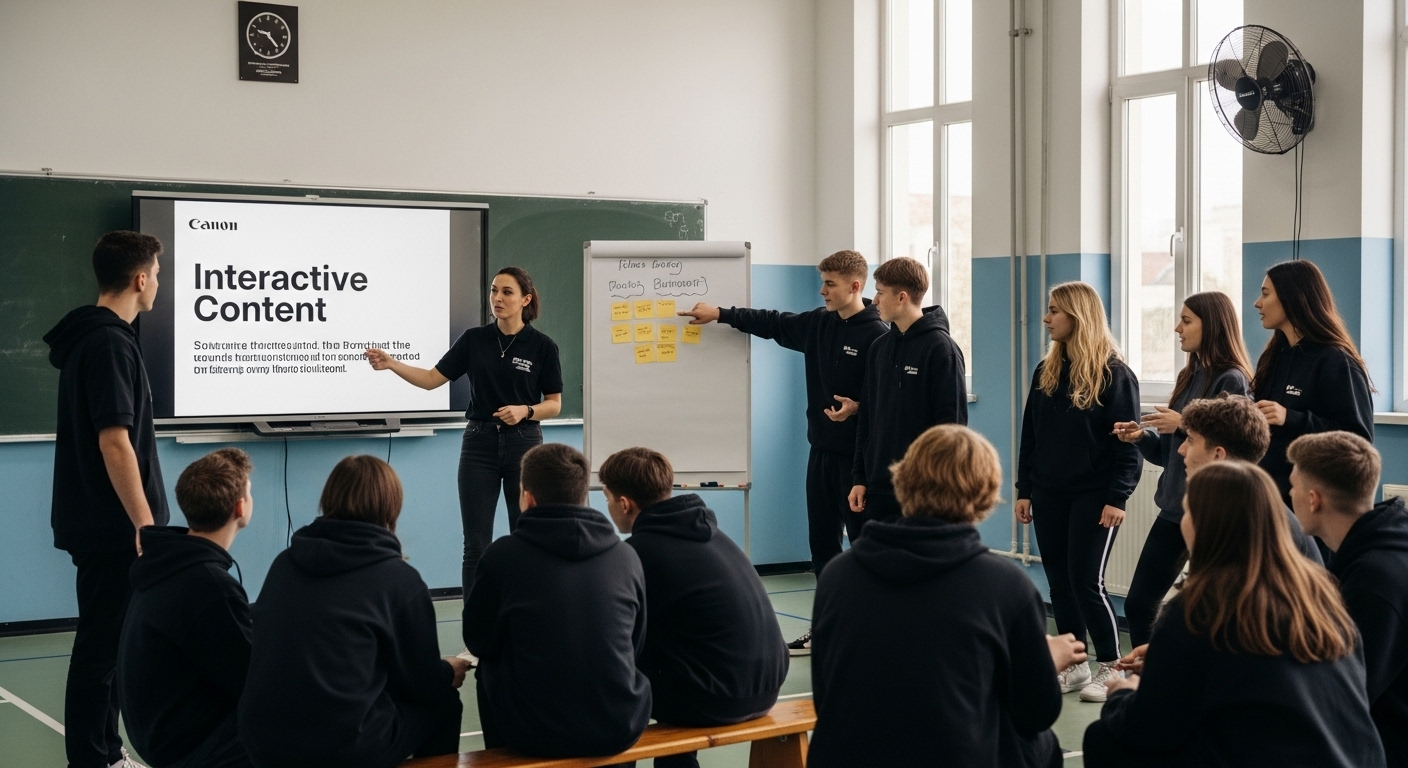
Consider developing a multi modal approach to content delivery. This might involve integrating visual presentations, live demonstrations, storytelling segments, and interactive challenge components that encourage students to become active participants rather than passive observers. For instance, if hosting a science assembly, design moments where students can predict experiment outcomes, vote on potential results, or even participate in simplified versions of scientific demonstrations.
Relevance is the cornerstone of student engagement. Each assembly segment should connect directly to students’ lived experiences, current curriculum, or emerging interests. This means avoiding generic presentations and instead crafting content that feels personalized and immediately applicable to their world. A historical presentation could include student role playing scenarios, a science assembly might incorporate local environmental challenges, and a character education program could feature student led discussions about real school community experiences.
Practical implementation requires careful choreography. Script your assembly with precise transition points that maintain energy and focus. Build in deliberate moments for student interaction every 7 to 10 minutes to prevent attention drift. Prepare backup engagement strategies for different age groups and learning styles, ensuring your content remains flexible and adaptive.
Verify your content plan’s effectiveness by conducting a preliminary review with a small student focus group or trusted educators. Seek honest feedback about potential engagement levels, clarity of messaging, and excitement potential. Be prepared to make nimble adjustments based on their insights, remembering that the most successful assemblies feel less like lectures and more like collaborative learning adventures.
Step 3: Structure the Assembly for Maximum Engagement
Designing an assembly that captivates students from start to finish requires a carefully engineered structure that maintains momentum, curiosity, and active participation. The architecture of your assembly is just as important as its content, creating a dynamic flow that prevents student attention from wavering and transforms the experience into an memorable educational journey.
Begin by creating a strategic narrative arc that mimics the most engaging storytelling techniques. This means crafting an assembly with clear dramatic progression: a compelling opening that immediately grabs attention, a middle section that builds complexity and interaction, and a powerful conclusion that reinforces key messages. Learn more about creating unique assembly experiences by understanding how professional educators design immersive learning environments.
According to the National Center on Safe Supportive Learning Environments, student engagement operates on multiple levels behavioral, emotional, and cognitive. Your assembly structure must address each of these dimensions. This means incorporating physical movement opportunities, emotional connection points, and intellectually stimulating challenges throughout the presentation.
Timing and pacing become critical elements in maintaining student engagement. Design your assembly with intentional rhythm, alternating between high energy segments and more reflective moments. Implement a pattern of short, dynamic interactions followed by brief periods of processing. For example, a 10 minute high energy demonstration could be followed by a 3 minute small group discussion, allowing students to digest and internalize the information they just experienced.
Technology and multimedia can be powerful tools in structuring an engaging assembly. Integrate video clips, interactive digital polls, live demonstrations, and sound effects that create sensory variety. These elements help reset student attention and provide multiple entry points for learning. Consider using unexpected transitions that surprise and delight students, breaking traditional presentation monotony.
Develop contingency plans for potential engagement drops. Have backup interactive activities ready that can be quickly deployed if you sense student attention beginning to drift. These might include quick physical movement breaks, spontaneous audience participation challenges, or rapid fire question and answer segments that reinvigorate the room’s energy.
Verify the effectiveness of your assembly structure by observing student body language, tracking participation levels, and collecting immediate feedback. Look for signs of sustained attention, voluntary participation, and genuine curiosity. A successful assembly structure transforms passive listening into an active, collaborative learning experience that students will remember long after the final moments.
Step 4: Incorporate Dynamic Presentation Techniques
Transforming traditional assemblies into captivating learning experiences requires mastering dynamic presentation techniques that speak directly to students’ sensory and cognitive engagement. Presentation style is the critical vehicle that transforms good content into unforgettable educational moments. The most effective presenters understand that delivery matters as much as the message itself.
According to Rochester Institute of Technology, successful presentations are about creating purposeful, clear experiences that invite student participation. This means developing a multisensory approach that combines verbal storytelling, visual stimulation, and interactive elements. Think of your presentation as a performance that must continuously recapture student attention through unexpected transitions, varied vocal modulation, and strategic movement across the presentation space.
Body language and vocal dynamics become powerful tools in maintaining student engagement. Presenters should practice deliberate physical movements that emphasize key points, using gestures that are expansive yet controlled. Vary your speaking pace and tone to create auditory interest. A monotone delivery will quickly cause students to disengage, while a dynamic vocal range can transform even complex information into an exciting narrative.
Visual elements must be carefully curated to enhance rather than distract from your message. Learn more about creating unique assembly experiences by understanding how professional presenters use visual storytelling. Incorporate high quality images, short video clips, and graphical representations that immediately communicate complex ideas. Avoid text heavy slides that overwhelm students visual processing capabilities. Instead, use bold graphics, minimal text, and compelling visual metaphors that illuminate your key messages.
Incorporate unexpected elements that surprise and delight students. This might involve sudden costume changes, live demonstrations, audience participation moments, or interactive technological elements that break traditional presentation boundaries. The goal is to create moments of genuine curiosity that pull students deeper into the learning experience.
Practice is essential for mastering dynamic presentation techniques. Record yourself presenting and critically analyze your performance. Look for moments of potential student disengagement and develop strategies to inject energy and interactivity. Pay attention to your timing, physical movement, vocal variation, and ability to create narrative tension.
Verify the effectiveness of your presentation techniques by observing student responses. Look for signs of sustained attention: forward leaning postures, voluntary participation, genuine questions, and an overall sense of collective excitement. A truly dynamic presentation transforms passive listening into an active, immersive learning adventure that students will remember long after the assembly concludes.
Step 5: Gather Feedback and Evaluate the Impact
The true measure of an assembly’s success lies not in its execution, but in its lasting impact on students. Comprehensive feedback collection transforms a one time event into a continuous learning opportunity, providing critical insights that will refine future educational experiences. Evaluating impact goes far beyond simple satisfaction surveys, requiring a nuanced approach that captures both quantitative and qualitative student responses.
According to the RAND Corporation, effective stakeholder feedback requires strategic design and comprehensive data collection. Develop a multi layered feedback mechanism that captures immediate reactions and long term educational outcomes. This means creating surveys that probe not just surface level enjoyment, but deeper learning and behavioral changes sparked by the assembly.
Immediate feedback collection should occur within 24 hours of the assembly, while student impressions remain fresh and vivid. Design survey instruments that include both structured quantitative questions and open ended qualitative prompts. Ask students to rate their engagement levels, describe key takeaways, and reflect on how the assembly might influence their thinking or future actions. Check out our guide on school assembly tips to understand comprehensive evaluation strategies.
Implement diverse feedback collection methods to capture a comprehensive view. This might include anonymous digital surveys, small group discussions, written reflections, and even creative expression activities like drawing or journaling about the assembly experience. By offering multiple avenues for response, you increase the likelihood of capturing genuine student perspectives.
Here is a table outlining options for gathering and evaluating feedback after your assembly, along with the method description and the type of response it captures.
| Feedback Method | Description | Type of Response |
|---|---|---|
| Digital Surveys | Structured online forms for immediate responses | Quantitative and qualitative |
| Small Group Discussions | Facilitated conversations among student groups | In-depth qualitative feedback |
| Written Reflections | Students write about their assembly experiences | Personal insights, open-ended |
| Creative Expression Activities | Drawing, journaling, or art related to assembly | Emotional and creative perspectives |
| Teacher/Counselor Debriefings | Staff share observed student reactions | Professional/behavioral observations |
| Follow-up Assessment | Check-ins weeks or months after the assembly | Long-term impact measurement |
Teachers and school counselors become critical partners in your evaluation process. Schedule brief debriefing sessions to gather their professional observations about student engagement, behavioral shifts, and potential areas of improvement. Their on the ground insights can reveal nuanced impacts that might not emerge through student surveys alone.
Beyond immediate feedback, design a follow up assessment strategy that tracks potential long term impacts. This could involve checking in with students weeks or months after the assembly to understand how its messages have resonated. Look for subtle indicators of changed perspectives, increased awareness, or modified behaviors that suggest the assembly made a meaningful educational impact.
Successful impact evaluation requires a commitment to continuous improvement. Treat each piece of feedback as a valuable data point that can help refine future assembly experiences. Be prepared to make substantive changes based on student and staff insights, demonstrating that you genuinely value their perspectives and are dedicated to creating increasingly powerful educational moments.
Turn Assembly Challenges Into Unforgettable Student Experiences
Are you struggling to create meaningful assemblies that truly engage your students and spark real learning? The article highlights common pain points—like low participation, lack of relevance, and one-size-fits-all presentations—that leave students bored and your efforts underappreciated. At Academic Entertainment, we understand how hard it is to tailor interactive, age-appropriate content that interests every student, keeps attention high, and aligns with your school’s core values.
It’s time to make your next assembly stand out. Visit Academic Entertainment to explore a full range of customizable live and virtual programs designed to boost involvement, enhance character education, and make learning unforgettable. Learn how you can encourage student participation in school activities and benefit from proven strategies on creating unique assembly experiences. Book with confidence knowing you are supported by 40 years of experience. Act now to secure your dates and transform your assemblies into powerful moments your students will talk about long after the event.
Frequently Asked Questions
How can I assess student interests before planning an assembly?
To effectively assess student interests, consider using student surveys, engaging in conversations with student representatives and teachers, and analyzing existing student engagement patterns. Collecting both quantitative and qualitative data will help you understand what topics and presentation styles resonate with your students.
What are some interactive content ideas for engaging students during assemblies?
You can create interactive content by incorporating elements like audience participation, real-time polling, and collaborative activities. This might include live demonstrations, storytelling segments, or hands-on challenges that allow students to actively engage with the assembly topic.
How should I structure an assembly to maximize student engagement?
To maintain student engagement, create a strategic narrative arc with a compelling opening, a dynamic middle section, and a strong conclusion. Incorporate varying energy levels, allow for movement opportunities, and integrate multimedia elements to create a memorable experience.
What techniques can enhance my presentation during an assembly?
Dynamic presentation techniques such as using varied vocal modulation, deliberate body language, and unexpected elements can significantly enhance student engagement. Incorporate visual aids that are relevant and attention-grabbing to keep students interested throughout the presentation.
Recommended
- Best High School Assembly Activities and Games Idea for Students
- School Assembly Tips for Administrators and Teachers – Academic Entertainment
- How to Make School Assemblies Even More Fun – Academic Entertainment
- What Are Interactive Assemblies? Understanding Their Impact – Academic Entertainment